E-waste recycling

The Basel Convention – Combating the illegal trafficking of hazardous waste.

The Basel Convention on the Control of Transboundary Movements of Hazardous Wastes and their Disposal was brought into force in 1992 in order to prevent the transportation of hazardous wastes to developing countries. Over 170 countries have now joined the convention, including Australia who became a member of the Basel Convention on the 5th February 1992. Transportation of hazardous waste received much negative press throughout the 1980’s with several high profile cases regarding the shipment of toxic waste. One such story involved the Khian Sea ship which, in 1986, spent 16 months sailing around the world with 14, 000 tonnes of toxic ash from

By |2020-10-18T14:30:43+11:00June 28th, 2020|Ewaste Articles|

Lack of awareness about e-waste recycling in Australia

Are we good recyclers? That depends on what you think should be recycled. According to the Australian Bureau of Statistics almost every Australian household (99%) participated in some form of recycling or reusing of waste in the 12 months prior to March 2009, a very positive statistic and one that has been gradually rising for the last decade.  With the help of our local councils we have learnt how to recycle, the 2009 ABS report on waste management states that 95% of households recycled or reused their paper / cardboard / newspapers, 94% recycled plastic bottles, 93% recycled glass and 90% recycled plastic bags.

By |2020-05-31T07:41:56+10:00May 31st, 2020|Ewaste Articles|

The forgotten fate of your electronic waste

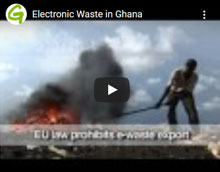
A recent investigation by Dateline has revealed the shocking truths behind the illegal export of electronic waste. At 1800Ewaste, we’re no strangers to writing articles and posting videos showing clips of electronic waste being dumped and burnt in developing countries, but even we were appalled by what we saw when SBS approached us for this investigation. Take a look at the video if you don’t believe us, and watch out for some familiar names and faces while you’re at it. "Destroying the air quality…..irreparable damage to your health" Electronic waste and its effects The Dateline investigation shows the very real damage that illegally exporting

By |2022-09-08T13:37:46+10:00May 17th, 2020|Ewaste Articles|

Ewaste Contamination Adelaide

Ewaste includes PCs, televisions, monitors, mobile phones, faxes, printers, photocopiers, stereos and any electronic product that is no longer in use because of being broken or obsolete. The most common generators of ewaste are households, government establishments, educational institutions and commercial premises. There are also some instances when ewaste can include electrical products such as irons, coffee machines, airconditioners, refrigerators, toasters, vacuum cleaners, dryers and washing machines. Barium Contamination Adelaide Barium compounds such as barium carbonate and barium sulfate are normally used in certain industries that include textile, oil and gas, electronics, rubber and plastics. Barium is also used in glass-making, enamels, ceramic glazes,

By |2020-05-03T07:32:42+10:00May 3rd, 2020|Ewaste Articles|
Go to Top